Man with van in Wealdstone for home moves, office transport and furniture collection

Our man with van in Wealdstone service is set up for practical moving work that needs a careful vehicle, sensible loading and straightforward handling from start to finish. We help with household moves, single-item transport, furniture pick-up and selected office relocation tasks, keeping the process simple for customers who want an organised move without unnecessary complication. The focus is on moving items safely, planning the load properly and making the journey efficient for the type of job being carried out.
If you need help moving between addresses, shifting bulky items or collecting something that will not fit in a car, we can support a wide range of removal requirements in and around Wealdstone. Our work is suited to people who want clear communication, a suitable van and a practical approach to loading. You can start by looking at our removal services for a wider view of the work we cover, then decide what matches your own move.
For a quotation, send the details of what needs moving, the collection and delivery points, and any access points we should know about. A brief description is enough to begin, but the more accurate the information, the better the plan we can prepare. If you already know you need a particular type of move, our pricing and quotes page explains the route to requesting costs before you book. Please ask for a quotation when you are ready.
Home moves planned around the items, access and timing
House removals often involve a mixture of furniture, boxes, soft furnishings and smaller possessions that need to be packed into the van in a sensible order. We can help with full or partial home moves, taking care to place heavier pieces securely and protect more delicate items around them. This matters because a van load is not simply a pile of objects; it needs a sequence that reduces movement and makes unloading smoother when you reach the next address.
Our home moves page is useful if you want a broader look at domestic moving work, while the related house removals and house movers pages describe the same kind of service from slightly different angles. We keep the approach flexible, so a move can focus on a few rooms, an entire flat or a family home depending on what is being transported. The main aim is to match the vehicle and loading plan to the job rather than force every move into one pattern.
For domestic customers, a clear inventory is often the most useful starting point. A simple list of larger furniture, packed boxes, fragile items and awkward pieces helps us estimate space and decide whether the job needs one journey or more than one. If you are comparing ways to move, the key question is usually not only distance but also how much needs handling, whether stairs are involved and whether certain pieces require particular care.
Furniture pick-up and careful transport for single items

Not every request is a full move. Many customers use our service for a single sofa, wardrobe, table, bed frame or appliance that needs collecting from a seller, shop, storage space or private address. A van-based move is often the sensible option when an item is too awkward for a small car, too heavy for one person to lift safely or too valuable to move without proper support. We aim to handle those items with the same organised approach we use for larger jobs.
See our furniture pick-up page for a dedicated description of collection work, and use moving van if you want to understand the vehicle side of the service. These pages are helpful when you need transport for one or two items rather than a full house removal. A single collection can still need good planning if the item is bulky, fragile or requires help at both ends.
When arranging a furniture collection, useful details include whether the item is assembled, whether it needs to go up or down stairs, and whether anyone will be available to help at pickup or delivery. These points affect the time needed and the handling plan. If the item is an awkward fit through doors or corridors, it is better to mention that early so the move can be approached with the right equipment and expectations.
Office removals for practical business relocation
Commercial moving work often needs a different rhythm from domestic removals because desks, chairs, files, IT equipment and stock may all need to be handled within a shorter window. Our office relocation work is aimed at businesses that want a straightforward transport service for moving selected items or a fuller office layout. The emphasis is on keeping the load organised, reducing avoidable disruption and moving the contents in the order that makes the most sense on arrival.
You can review our office removals and office relocation services pages to see how we approach commercial moves, including furniture transport and the handling of equipment that needs care. Where appropriate, our commercial moves page offers a wider view of business transport tasks. Different offices have different priorities, so the service should suit the type of items being moved rather than assume every relocation is the same.
Good preparation can make office relocation easier: label boxes clearly, separate items that should travel together and identify anything that is fragile or confidential. If you can provide access details for lifts, loading areas or stairs, that also helps shape the move. A business relocation is often judged by how smoothly the essentials are moved, so an orderly plan matters just as much as the vehicle itself.
Choosing the right van and removals support
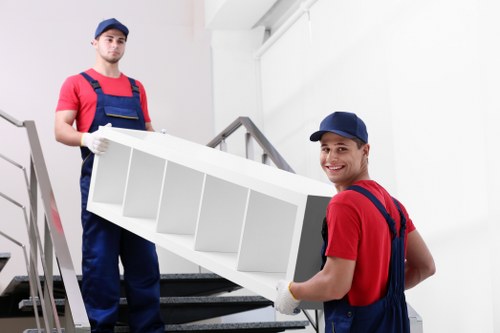
Different moves benefit from different levels of support, and one of the main decisions is whether you need a simple man and van arrangement or a broader removal service with more structured handling. A smaller move may only need transport and loading help, while a larger one may involve several stages of packing, item grouping and careful sequencing. We offer practical assistance across that spectrum so the job can be matched to the amount and type of property being moved.
Our related pages include man and van, man with a van, and man with van removal, which all reflect the same core idea from different entry points. For customers comparing options, these pages can help identify whether the work is better suited to a basic transport visit or a more involved removal plan. The right choice depends on what needs lifting, where it is going and how much time is needed at each end.
Some jobs need extra thought because of access rather than volume. Narrow hallways, upstairs flats, shared entrances, parking restrictions and long walks from the vehicle can all affect the load pattern. If the move is straightforward, the service can stay equally straightforward; if the access is awkward, the planning should be adjusted early so there are no surprises on the day.
Packing support, protection and order during the move
Packing is one of the most useful stages in any removal because it shapes how safely items travel and how quickly they can be unloaded. We can support moves where belongings are already packed, and we can also work alongside packing and unpacking services for customers who want a more organised handover. Good packing keeps loose objects together, limits shifting in transit and makes it easier to place boxes in the correct rooms later.
For many customers, the decision is not whether to pack at all but how much of the packing should be done in advance. Fragile items, paperwork, kitchen items and mixed household goods often benefit from separate labelling. If you are arranging a collection of several types of item, the order they are packed can be just as important as the number of boxes. The clearer the grouping, the easier it is to keep the load balanced and to avoid unnecessary re-handling.
A practical moving checklist can include box counts, key furniture pieces, access notes and any items that must not be stacked. If a move contains both robust items and delicate ones, it is sensible to keep them apart during loading. That approach helps protect surfaces, reduces movement inside the van and can make unloading more efficient at the destination.
About Wealdstone

Wealdstone is a district in the London Borough of Harrow, in north-west London, shaped by its position within the wider urban fabric of the capital and by the historic development of the Harrow area. The place is closely associated with Wealdstone High Street, a local commercial spine that runs through the district and gives it a recognisable centre. As with much of outer London, the landscape combines residential streets, local shops, transport links and civic facilities rather than a single dominant historic core. The name itself is long established, and the area has been influenced by both suburban growth and later redevelopment. Rail travel has been important in the locality, with Harrow & Wealdstone station forming a major transport node on the London Overground, London Northwestern Railway and other services. The station is also remembered for the 1952 rail disaster, one of the worst in British railway history, which remains a significant part of the area’s historical identity. Nearby public spaces such as Byron Recreation Ground provide open green space, while local schools, places of worship and community uses contribute to daily life. Wealdstone sits within easy reach of the larger Harrow town centre, but it retains its own distinct character through its streetscape, shops and transport connections. The area’s built environment includes a mix of later twentieth-century developments and older surviving buildings, reflecting successive phases of change rather than a single period. That layered quality is typical of many London districts that grew around transport and trade, and it gives Wealdstone a practical, lived-in atmosphere that continues to evolve.
Removal planning, access details and the value of clear instructions
Once the main items are identified, the next step is to think about how the move will actually happen. That means checking whether there are stairs, lifts, parking constraints or fragile access points that need to be respected. A move does not need to be complicated to benefit from this thinking; even a modest collection can go more smoothly when the load order and route are clear before the van arrives.
We recommend sharing any information that affects handling, such as bulky items, awkward shapes, flat-pack furniture that has been dismantled, or goods that must stay upright. A short note about the exact collection and delivery points is also useful because it helps the move plan account for distance from the vehicle to the door. If a job has several parts, the simpler the instructions, the easier it is to keep everything coordinated.
For customers comparing services, the most useful distinction is often between basic transport and fuller removal support. A basic transport job may only need a van and loading help, while a larger move may benefit from careful placement of furniture, sectional loading and more attention to sequencing. You do not need to overstate the job; you only need to describe it clearly so the right approach can be chosen.
Safe handling, insurance awareness and moving with care

Safe handling is central to any moving service because the items being transported are often valuable, awkward or both. Furniture with glass, polished surfaces, mechanical parts or loose fittings should be secured in a way that reduces scuffing and movement. The same principle applies to box loads, where weight should be spread evenly rather than stacked in a way that creates pressure points. An organised van load is not about overcomplicating the job; it is about protecting the items and making the transport more reliable.
Our insurance and safety page is a useful place to review the practical standards behind the work, while health and safety policy gives a clearer picture of how safety considerations are handled. Customers sometimes ask how to decide what needs extra protection, and the simplest answer is to consider fragility, weight and shape. Items that are difficult to carry or difficult to stack usually deserve more attention before the van is loaded.
If you are planning a move, it can help to separate items into what must be moved, what can be taken later and what is not going at all. That avoids unnecessary handling and keeps the job focused. Please request a quotation once you have those details ready, and use contact us only when you are ready to arrange the move itself.
Pricing factors for man and van work in Wealdstone
Quotation requests are usually shaped by a small number of practical factors rather than by any one single detail. The amount of furniture or luggage, the distance between addresses, the ease of access and the time needed for loading all affect the final arrangement. Because of that, it is helpful to think about the move as a set of tasks: what needs moving, how far it is going and what kind of handling it requires at each end.
You can use our pricing and quotes page to understand the route to a cost enquiry, and our about us page if you want a general overview of the business pages available on the site. We do not add unnecessary extras to the conversation; the useful information is the practical information that affects the move. If you are moving only a few items, a concise description is enough, but more complex jobs benefit from a fuller note.
When asking for a price, it is sensible to mention whether items are ready to collect, whether any assembly or disassembly is needed, and whether there are time limits at either address. Those details do not need to be written as a long brief. A few well-chosen facts can be more useful than a crowded message, and they help us return a quotation that reflects the real job rather than a vague estimate.
Related moving pages, service detail and final steps
The site also includes pages for wider moving categories such as removal companies, removal company, removal services, removal truck hire, removal van, removals van, removals near me and removals. These pages are useful for understanding the different ways moving work is described, especially when the job is being compared across several service types. The wording may vary, but the practical aim is similar: move items safely, with the right vehicle and the right amount of support.
There are also pages for man with van removals and man with van, which help customers find the version of the service that best matches their needs. If you are still deciding what level of help to request, think first about the number of items, then about access and finally about how much loading support will be useful. That simple order of decisions often makes the enquiry easier to write and the quotation easier to prepare.
For a straightforward next step, send a short summary of the move and ask for a quotation. You can describe a home move, office move or furniture collection in your own words, and we will use that information to shape the response. If you are ready, contact us for a quotation and we can begin from there.